
The MGV Gateway · Architecture detail
See how the pieces connect.
Follow the path from an assignment to the agents, checks, and records that support it. This detailed view complements the overview and shows how the parts work together.
Architecture explanation
One controlled path from request to release decision.
- 01
Define the assignment
Set the intended result, relevant sources, allowed work, and the checks that will show whether it is ready for review.
- 02
Choose the limits
Use the approved route for read-only review or a limited code change. Wider work needs separate authority.
- 03
Keep and review the result
Retain the output and relevant checks. A separate review can look for defects before the work advances.
- 04
Decide what ships
A person decides whether to accept, correct, or release the work. A completed technical step is not release approval.
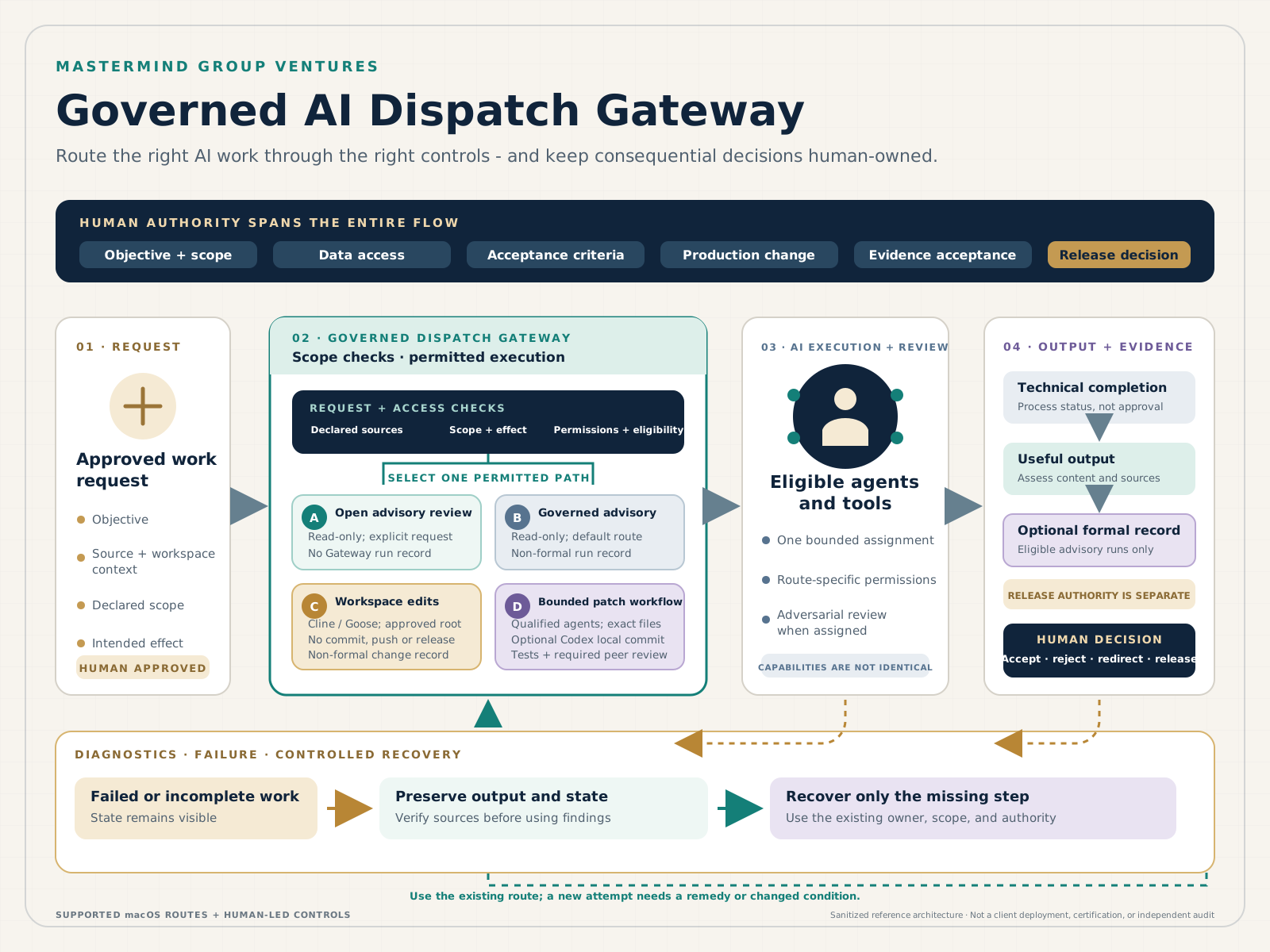
Read the diagram as text
- Define the assignment. People set the objective, relevant sources, allowed work, and acceptance criteria. Human authority applies throughout the process.
- Choose a permitted route. Some approved routes allow read-only review; others allow a limited workspace change without a commit, push, or release. A bounded patch route limits work to exact files and includes checks and peer review. Any local commit requires specific human authorization.
- Execute and review. Eligible agents receive a bounded assignment with route-specific permissions. Adversarial review is performed when assigned.
- Assess the result. Technical completion is not approval. Useful output is assessed against its sources. Some reviews retain a formal record; release remains a separate human-owned decision.
Recover without losing useful work. Keep the output and state, verify sources before using findings, and recover the missing step through the existing owner, scope, and authority. A new attempt requires a remedy or changed condition.